
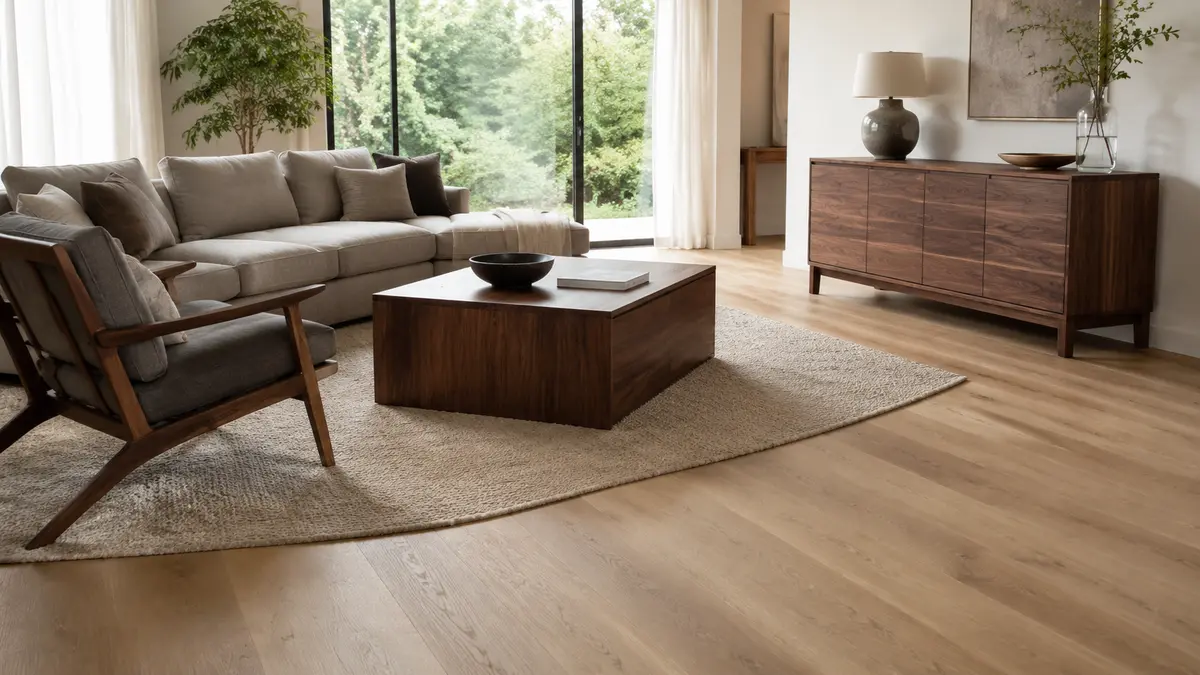
Wood furniture does not need to match the floor exactly. In fact, copying one finish across every surface can make a room look flat or artificial. The goal is to coordinate undertones, create deliberate contrast and repeat each important wood tone so the room feels connected. This guide explains how to match wood furniture with floor colour confidently.
Match Wood Furniture with Floor Colour Using Undertones
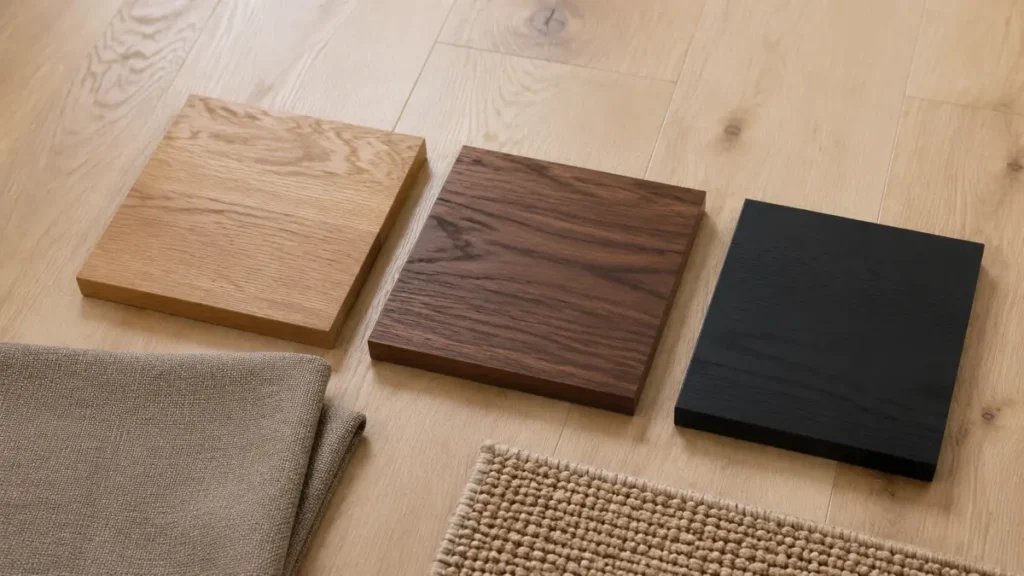
To match wood furniture with floor colour successfully, first identify whether each surface has warm, cool or neutral undertones. Warm oak usually coordinates well with cream, beige and earthy flooring, while grey-toned timber often suits cooler floors. Use a rug to create separation when the wood shades are very similar. When you match wood furniture with floor colour, repeat one wood tone elsewhere through shelves, frames or accessories. For complete room planning, read our guide on how to furnish a new home.
Identify the Floor’s Undertone
First decide whether the floor appears warm, cool or balanced. Honey oak, teak and many walnut finishes contain warm yellow, orange or red notes. Ash, grey-washed oak and some pale timbers may feel cooler. Photographing the floor is useful for records, but make decisions with physical samples in the room because screens alter colour.
Choose Contrast Instead of an Exact Match
Furniture that is slightly lighter or darker than the floor is easier to distinguish. A medium oak floor may work with dark walnut furniture, pale oak pieces or painted furniture. If the floor and furniture are nearly identical, place a rug between them or vary the texture and shape so their boundaries remain clear.
Coordinate Undertones
Different wood species can work together when their undertones relate. Warm woods generally sit comfortably beside other warm or neutral woods. A strongly orange floor paired with a strongly blue-grey wood can feel disconnected unless another material bridges the two. Upholstery, rugs and wall colour can provide that bridge.

Use a Dominant Wood Tone
Let the flooring remain the dominant wood surface, then select one main furniture tone and one supporting tone. For example, a pale oak floor can support walnut dining furniture with smaller pale-oak accents. Limiting the number of unrelated finishes keeps the room calm.
Repeat Each Finish
A wood tone looks intentional when it appears more than once. Repeat walnut from a coffee table in a picture frame, lamp base or side table. Repeat pale oak from a cabinet in a stool or tray. These repetitions need not be large.
Consider the Wood Grain
Colour is only one factor. Strong rustic grain, smooth fine grain, matte surfaces and glossy finishes create different visual weights. If the flooring has dramatic knots and variation, simpler furniture surfaces usually provide better balance.
Use Rugs to Separate Similar Woods
A correctly sized rug prevents dining tables, sofas and coffee tables from visually merging with the floor. Choose a rug that relates to the wall and upholstery while offering enough contrast with both wood surfaces.
Coordinate Painted Furniture
Painted pieces can reduce an overload of wood. Warm white, black, muted green, charcoal or soft taupe may work depending on the overall palette. Check painted samples beside the floor rather than assuming that every neutral will suit it.
Room-by-Room Examples
- Pale oak floor: Try medium walnut, black-stained wood or slightly darker natural oak.
- Golden wood floor: Use warm walnut, cream-painted furniture and restrained black accents.
- Dark walnut floor: Introduce pale oak, warm white or lighter upholstered furniture to prevent heaviness.
- Grey-washed floor: Choose balanced oak, charcoal or painted pieces without adding too many competing grey woods.
Common Wood-Matching Mistakes
- Ordering furniture from online photographs without a material sample
- Trying to match the floor exactly
- Mixing many one-off wood finishes
- Ignoring grain, gloss and texture
- Forgetting that artificial light changes wood colour
- Using a rug too small to separate similar surfaces
Helpful Shopping Links
Affiliate disclosure: As an Amazon Associate, Djeema Furniture Guide earns from qualifying purchases. If you buy through these links, we may earn a commission at no additional cost to you.
Final Thoughts
Successful wood coordination comes from related undertones, useful contrast and controlled repetition—not perfect matching. Compare real samples on the floor, consider grain and lighting, then repeat the chosen furniture finishes throughout the room.