
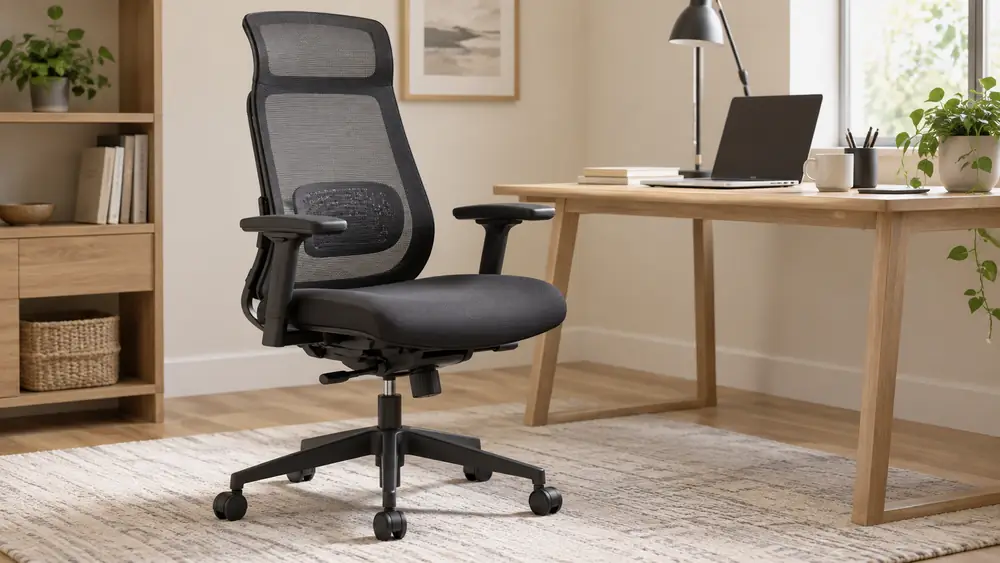
An office chair for long working hours is one of the most important investments for anyone who spends several hours at a desk. The right chair supports healthy posture, reduces strain on the back and shoulders, and helps you remain comfortable and productive throughout the day. A properly adjusted office chair for long working hours should support your body while allowing natural movement.
Comfort is important, but proper support, adjustability and suitability for your workspace matter just as much. This guide explains the practical features to compare before choosing a chair for extended daily use.
1. Start With How Long You Sit
Not every office chair is designed for extended daily use. If you sit for only one or two hours at a time, a basic chair may be sufficient. But if you work for six to eight hours or more, look for a chair designed to provide proper ergonomic support.
Long working hours place repeated pressure on your lower back, neck, hips and legs. Comfort alone is therefore not enough. The chair should help support your body in suitable positions throughout the day.
2. Check the Seat Height and Seat Depth
An office chair should allow your feet to rest comfortably on the floor while your knees remain at a natural angle. Adjustable seat height is especially important because everyone’s body proportions are different.
Seat depth matters too. When you sit fully against the backrest, there should still be a small gap between the front edge of the seat and the back of your knees. If the seat is too deep, it can place unwanted pressure behind the legs. If it is too shallow, your thighs may not receive enough support.
3. Lumbar Support in an Office Chair for Long Working Hours
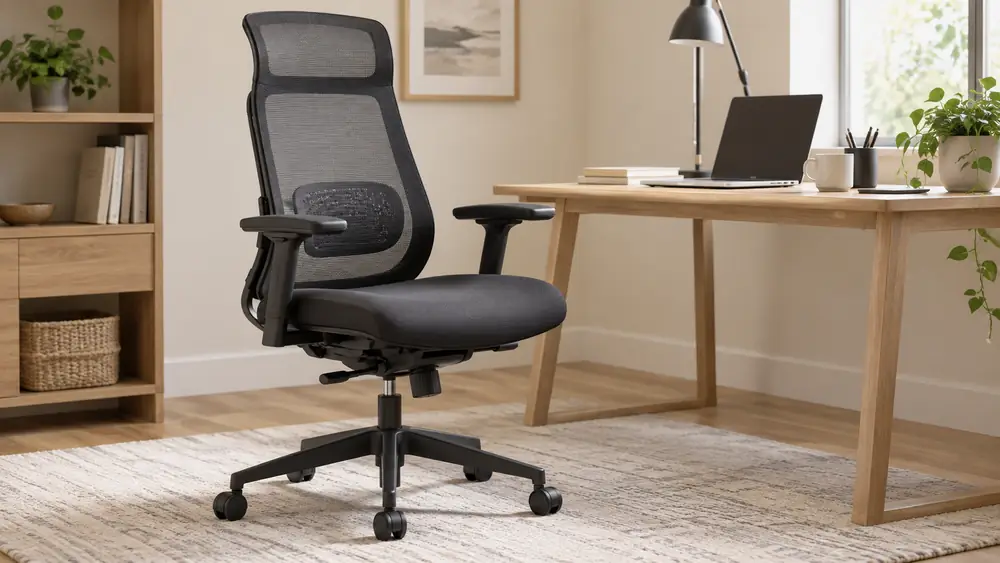
Lower-back support is one of the most important features to consider. The natural curve of the lower spine needs support while you are seated. A chair with good lumbar support can help reduce slouching and encourage a more comfortable sitting position.
Adjustable lumbar support is particularly useful because it allows you to position the support according to your body shape. When comparing an office chair for long working hours, lumbar support should be one of your highest priorities.
Djeema Expert Note: For long daily working hours, prioritize adjustability over appearance. A chair that allows you to adjust seat height, lumbar support and armrests will generally be more practical than a visually impressive chair with very limited adjustment.
4. Pay Attention to Armrests
Armrests are often overlooked, but they can play an important role in reducing unnecessary pressure on your shoulders, arms and wrists. Your armrests should allow your arms to rest comfortably while your shoulders remain relaxed.
If the armrests are too high, they may push your shoulders upward. If they are too low, they may provide very little useful support. Adjustable armrests are preferable because they can be positioned according to your desk height and preferred working position.
5. Choose a Supportive Backrest With Recline
A supportive backrest helps your upper and lower back remain comfortable during long working sessions. A chair that allows a small amount of recline and movement can be more comfortable than one that forces you to remain completely upright throughout the day.
Look for a chair that allows you to lean back comfortably and change your position occasionally. Remaining in exactly the same position for many hours is rarely ideal.
6. Consider the Seat Cushioning and Material
A chair used for long hours should provide enough cushioning to remain comfortable without being excessively soft or unsupportive. The material used on the chair also affects comfort, appearance and temperature.
- Mesh backs: Allow airflow and can help keep you cooler during long working sessions.
- Fabric chairs: Can provide a softer and warmer seating experience.
- Leather or leather-look chairs: Can provide a more executive appearance but may feel warmer in hot climates.
The best choice depends on your climate, working environment, personal preference and how many hours the chair will be used each day.
7. Check Stability and Mobility
A good office chair should feel stable while still being easy to move when necessary. A five-point base is commonly used because it provides good balance and stability.
The chair’s wheels should also be suitable for your flooring. Some casters are designed for carpets, while softer wheels may be more suitable for hard floors. If you frequently move between different parts of your desk, smooth mobility can make your workspace noticeably more convenient.
8. Match the Chair to Your Desk and Workspace
Even a good office chair can feel uncomfortable if it does not match your desk height, monitor position or overall workstation setup. Your chair, desk, keyboard and monitor should work together rather than being considered separately.
Ideally:
- Your elbows should rest at a comfortable and natural angle.
- Your monitor should be positioned at a comfortable viewing height.
- Your feet should have proper support.
- Your chair should fit comfortably beneath or beside the desk.
- You should have enough room to move without hitting nearby furniture.
If your workspace is located inside a bedroom or living room, choose a chair that complements the surrounding furniture without sacrificing comfort. For broader room planning, read our guide on how to furnish a new home.
9. Think Long-Term, Not Just About the Lowest Price
Price is important, but the cheapest office chair is not always the best value. If you use a chair for several hours every working day, comfort, adjustment quality and durability become much more important.
A better-quality chair may cost more initially, but if it provides better daily comfort and lasts longer, it can be a smarter long-term investment.
10. Important Features to Check Before Buying
Before choosing an office chair, compare the important features rather than deciding only from the appearance of the chair.
- Adjustable seat height
- Suitable seat depth
- Good lumbar support
- Adjustable armrests
- Comfortable backrest
- Recline or tilt function
- Breathable or comfortable upholstery
- Stable five-point base
- Suitable wheels for your flooring
- Correct dimensions for your desk and workspace
Interested in Comparing Ergonomic Office Chairs?
Check current office-chair models, specifications, ratings and availability on Amazon. Compare options with adjustable lumbar support, seat-height adjustment, supportive armrests, breathable materials and a stable five-point base.
Check on Amazon.com →Check on Amazon.in →
Product availability, specifications and prices may change. Please check the current product details, dimensions and suitability before purchasing.
Final Thoughts
An office chair for long working hours should do much more than simply look attractive. It should support your body, suit your workspace and remain comfortable throughout the working day.
Focus first on adjustability, lumbar support, seat dimensions, armrests and the overall quality of construction. Most importantly, remember that no single chair is perfect for everybody. The best office chair is the one that suits your body, your desk, your working habits and the number of hours you spend sitting each day.
A carefully chosen office chair can make your workspace more comfortable, practical and productive for many years.