
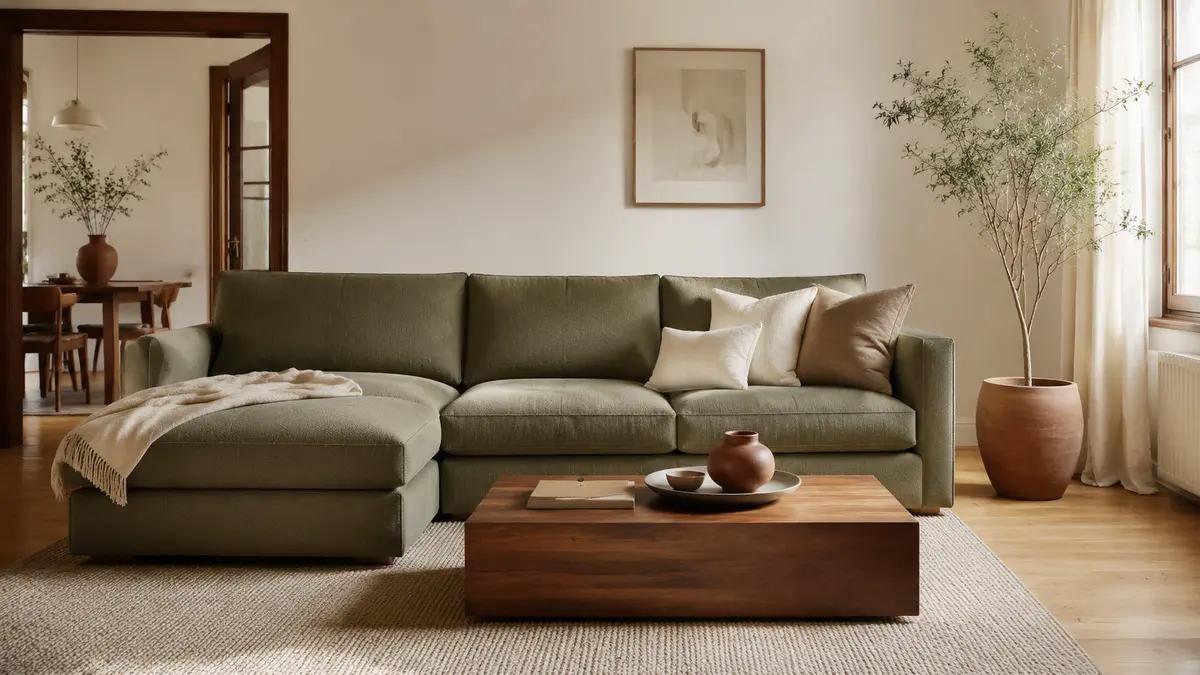
A sofa is one of the largest colour surfaces in a living room and usually remains for many years. Its colour should work with the floor, walls, curtains, lighting and household lifestyle—not simply look attractive in a showroom. This guide explains how to choose a sofa colour that supports the entire room.
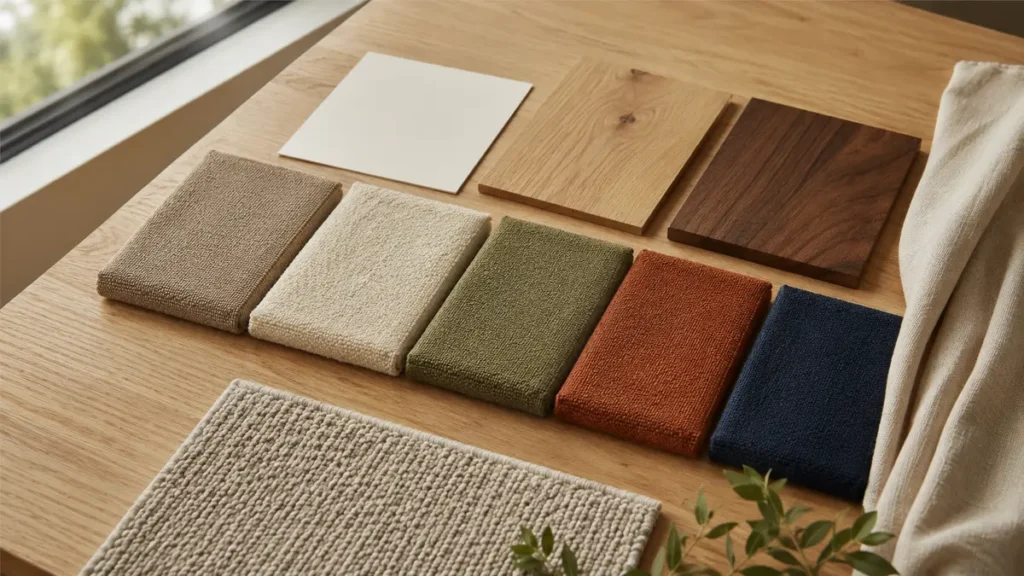
Table of Contents
Start with Fixed Finishes
Place upholstery samples beside the flooring, wall paint, cabinets and stone. Identify their undertones. A sofa does not need to match these surfaces, but it should share a compatible temperature or be connected by another repeated colour.
Decide Whether the Sofa Should Blend or Contrast
A sofa close to the wall colour creates a calm, spacious effect. A contrasting sofa becomes a focal point and needs support from art, cushions or accessories. In small rooms, tonal variation often feels lighter than a strong isolated contrast.
Choose Neutral Colours Carefully
Beige, taupe, grey, cream and brown are not universal. Beige may lean yellow or pink; grey may lean blue, green or violet. Compare several large fabric samples in the room before deciding.

Using a Coloured Sofa
Muted olive, rust, navy, clay, teal or burgundy can remain versatile when they relate to the home palette. Choose a slightly restrained version of the colour, then repeat it in small amounts rather than filling the room with matching accessories.
Consider Daylight and Lamps
Upholstery can look lighter near a bright window and darker at night. Warm bulbs may intensify cream and red; cool light may emphasize blue and grey. Move the sample to several parts of the sofa position.
Plan Curtains and Rugs Together
The sofa, curtains and rug should not all use the same colour and tone. Let one lead, one support and one provide controlled contrast. Texture can separate similar neutral colours.
Match Colour to Daily Life
Very pale fabric shows spills and denim transfer more readily, while very dark fabric may show dust and pet hair. Mid-tone textured upholstery is often forgiving. Check cleaning codes, removable covers and fabric protection rather than relying on colour alone.
Test a Large Sample
Small swatches hide pattern and colour variation. Borrow the largest available sample, place it vertically and horizontally, and observe it for several days. Photograph it only as a record; trust the physical sample.
Useful Colour Pairings
- Warm white walls and oak floor: taupe, olive, clay or warm charcoal.
- Greige walls and walnut: cream, warm grey, muted blue or rust.
- Cool grey tile: balanced grey, navy, blue-green or warmer neutral accents.
- Dark wood floor: lighter upholstery can prevent the room from feeling heavy.
Common Sofa-Colour Mistakes
- Choosing under showroom lighting only
- Ordering from a screen without a fabric sample
- Ignoring undertones in neutral colours
- Matching sofa, curtains and rug exactly
- Choosing pale or dark fabric without considering maintenance
- Following a short-lived trend for a long-term purchase
Helpful Shopping Links
Affiliate disclosure: As an Amazon Associate, Djeema Furniture Guide earns from qualifying purchases. If you buy through these links, we may earn a commission at no additional cost to you.
Also read our guide on choosing the correct How to Choose a Sofa Colour
Final Thoughts
Choose sofa colour with the actual room materials, lighting and lifestyle in view. A tested colour with the right undertone and maintenance level will remain useful long after a trend passes.