
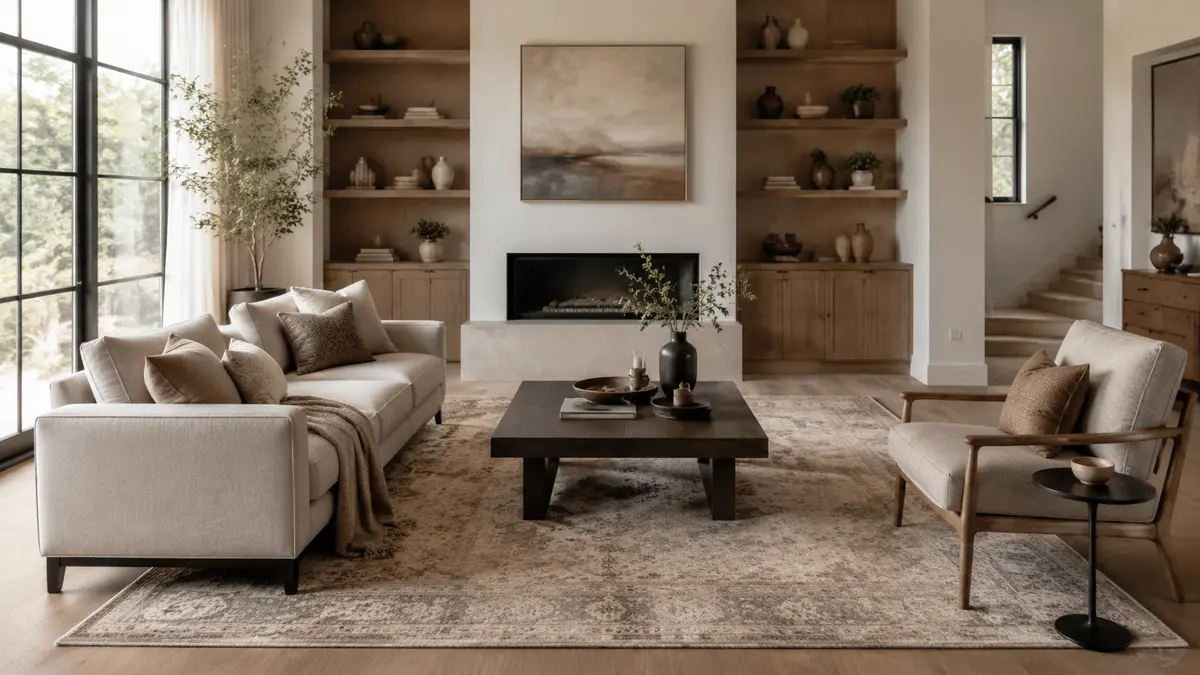
A living-room rug should connect the furniture rather than sit like a small island beneath the coffee table. Size determines whether the seating group feels unified; colour and material then add comfort and character. This guide explains how to choose a living room rug by layout, colour, pattern and maintenance.
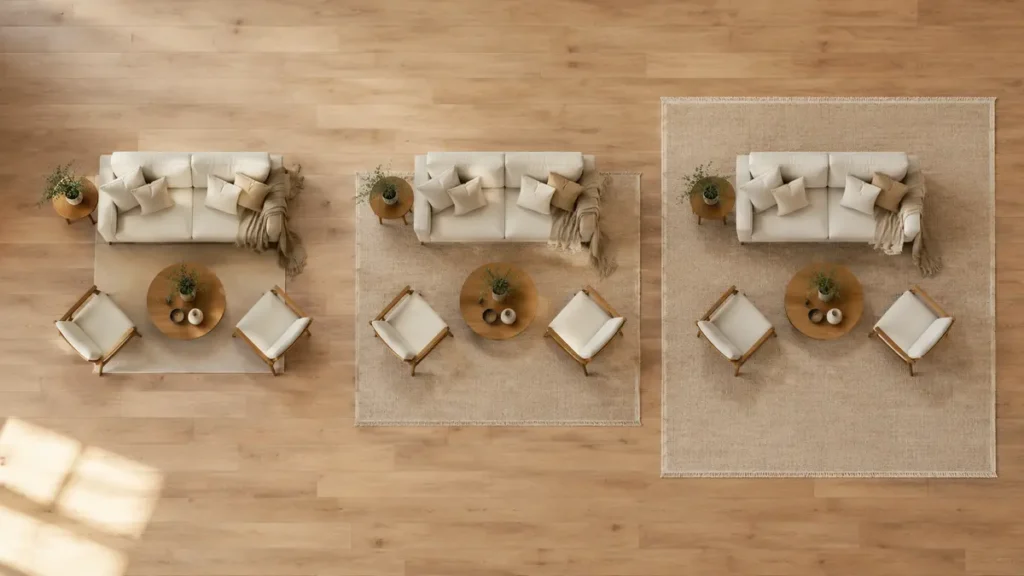
Table of Contents
How to Choose a Living Room Rug by Size
Learning how to choose a living room rug begins with measuring the complete seating area. The rug should visually connect the sofa, chairs and coffee table instead of appearing like a small separate island. In most living rooms, place at least the front legs of the main seating furniture on the rug. Before purchasing, mark the proposed rug dimensions on the floor with removable tape. This makes it easier to check furniture placement, walking space and the visible flooring border. When deciding how to choose a living room rug, compare the dimensions with the entire furniture arrangement—not only the coffee table.
Plan the Furniture Before the Rug
Confirm sofa and chair positions first. Measure the complete seating group and mark potential rug sizes on the floor. A rug chosen before the layout is often too small or the wrong shape.
Use a Size That Connects Seating
In many rooms, at least the front legs of the sofa and chairs should sit on the rug. Larger rooms may place all seating legs on it. The exact rule matters less than creating a clear visual connection between every seat.
Leave a Balanced Floor Border
Allow some flooring to remain visible around the rug. An uneven narrow strip on one side and wide strip on another can make the room feel off-centre. Align the rug with the seating group, not automatically with the room walls.

Choose Shape for the Layout
Rectangular rugs suit most sofa arrangements. A square rug can support a square conversation group, while a round rug works under a curved arrangement or in a defined small zone. Do not use a round rug simply to correct an undersized purchase.
Coordinate Rug Colour
Compare the rug with floor, sofa, curtains and wall paint. It can bridge these colours through several related tones. On a dark floor, a lighter rug creates separation; on a pale floor, mid-tone pattern can anchor the group.
Control Pattern
If the sofa and curtains are plain, the rug may carry more pattern. If upholstery or artwork is already dominant, a textured solid or subtle design may provide balance. View a large sample because small swatches hide pattern scale.
Select Material for Lifestyle
Wool is resilient and comfortable but varies in shedding and price. Synthetic fibres can offer stain resistance and value. Natural-fibre rugs provide texture but may feel rough and respond poorly to moisture. Check cleaning instructions and pile height.
Use the Correct Rug Pad
A suitable pad reduces slipping, protects flooring and improves comfort. Ensure it is compatible with both the rug and floor finish, and trim it so it remains hidden.
Common Rug Mistakes
- Choosing a rug that only fits beneath the coffee table
- Buying before the seating layout is final
- Ignoring door clearance and pile height
- Matching every textile exactly
- Choosing delicate material for a busy household
- Skipping a suitable non-slip pad
Helpful Shopping Links
Affiliate disclosure: As an Amazon Associate, Djeema Furniture Guide earns from qualifying purchases. If you buy through these links, we may earn a commission at no additional cost to you.
For a complete room-by-room plan, read our guide on how to furnish a new home.
Final Thoughts
Choose the rug after the furniture plan and prioritize size before colour. A properly scaled, practical rug connects seating, protects the floor and gives the living room a finished foundation.