

A coffee table must fit the seating group, support daily activities and leave comfortable movement around it. Shape and material matter, but proportion comes first. This guide explains how to choose a coffee table by size, shape, height and use.

How to Choose a Coffee Table for Your Sofa
Understanding how to choose a coffee table starts with the sofa. The table should normally sit close enough to reach comfortably while leaving sufficient space for walking. Its height should be approximately level with the sofa seat or slightly lower. A table that is excessively high or low can feel uncomfortable during everyday use.
When learning how to choose a coffee table, consider how the room is actually used. Families may prefer rounded corners, durable materials and useful storage. Glass can make a compact room feel lighter, while solid wood adds warmth and visual weight. Before buying, mark the proposed dimensions on the floor and check movement around the entire seating area.
Table of Contents
Measure the Seating Area
Measure the sofa’s usable seat width and the open area in front. Mark a table outline on the floor and test the route around it. Account for recliners, drawers and people entering the seating group.
Choose the Right Length
A coffee table commonly looks balanced when it is substantially shorter than the sofa rather than spanning its full width. The exact result depends on chairs and sectionals, so judge the complete group.
Choose a Comfortable Height
The top should relate to the sofa seat height. A very high table can obstruct sightlines; a very low table may be difficult to use. Consider elderly users and whether the table supports serving, work or only display.
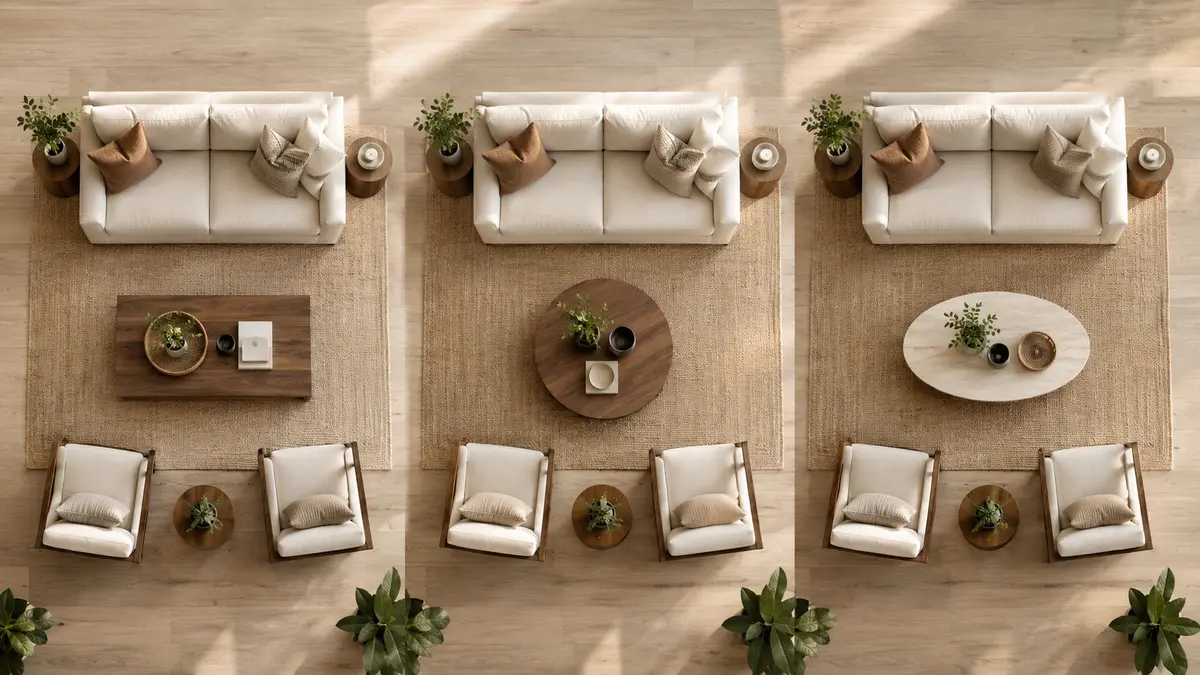
Select the Shape
- Rectangular: Works naturally with standard sofas and long seating groups.
- Round: Removes sharp corners and improves flow in compact or busy rooms.
- Oval: Offers useful length with softer circulation.
- Square: Suits deep sectionals or nearly square seating arrangements.
- Nested tables: Provide flexible surfaces when selected at practical heights.
Choose Material for Real Use
Solid wood is warm and repairable but may mark. Stone is durable but heavy and can stain depending on type. Glass feels visually light but shows fingerprints and requires safety consideration. Metal adds structure but should not create sharp exposed corners in a busy route.
Consider Storage
Drawers or shelves can hold remotes and books, but bulky storage tables appear heavier. Lift-top tables may help occasional laptop use; confirm the mechanism is stable and does not compromise legroom.
Coordinate Rather Than Match
Relate the table to one existing wood, metal or stone finish. It need not match the television unit exactly. Contrast in material can prevent a room from looking like a furniture set.
Common Coffee-Table Mistakes
- Choosing a table too small for the sofa
- Ignoring the walking gap
- Using a sharp corner in a tight route
- Buying heavy stone without checking floor and delivery access
- Selecting appearance without considering cleaning
Helpful Shopping Links
Affiliate disclosure: As an Amazon Associate, Djeema Furniture Guide earns from qualifying purchases. If you buy through these links, we may earn a commission at no additional cost to you.
For complete furniture planning, read our guide on how to furnish a new home.
Final Thoughts
Choose the table only after the sofa and chairs are positioned. Correct length, height, shape and circulation will make even a simple table feel better than an impressive but poorly proportioned one.