
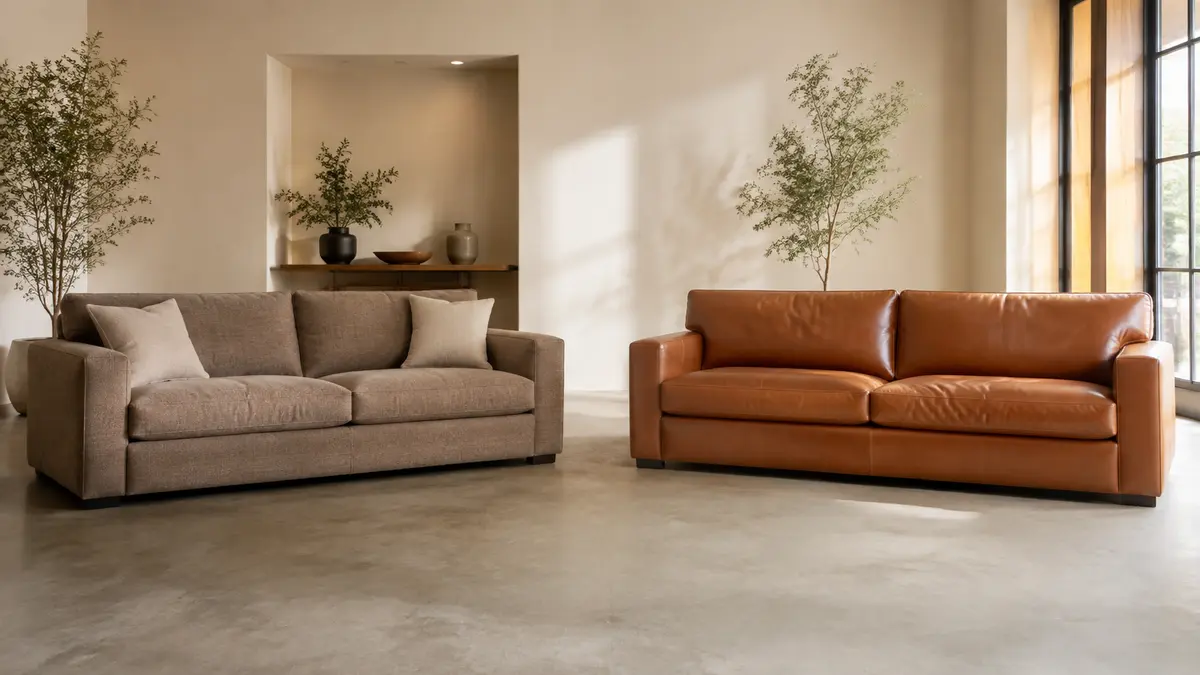
Fabric and leather can both produce a comfortable, durable sofa, but they behave differently in daily use. The better choice depends on climate, household habits, maintenance expectations, pets, children and budget. This fabric vs leather sofa comparison focuses on practical differences rather than appearance alone.
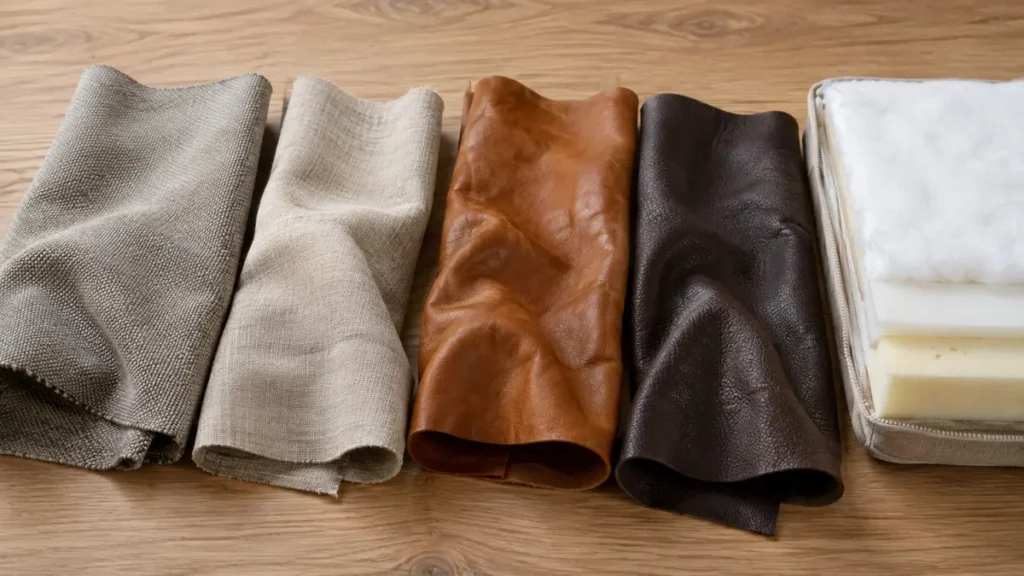
Table of Contents
Comfort and Temperature
Fabric usually feels soft immediately and does not become as cold or warm to the touch. Leather adjusts to body and room temperature, but direct sun or hot conditions can make it uncomfortable. Cushion construction often affects comfort more than the cover material.
Appearance and Ageing
Fabric offers extensive colours, weaves and patterns. Leather develops creases and patina; good-quality leather may become more characterful, while lower-quality coated surfaces can peel or crack. Ask exactly what portion of the sofa uses real leather.
Cleaning and Spills
Many spills can be wiped from protected leather quickly, but unsuitable cleaners may damage its finish. Fabric can absorb liquid, although removable covers and modern performance textiles improve maintenance. Always follow the manufacturer’s cleaning code.
Children and Pets
Tightly woven performance fabric can resist stains and snagging, while loose weaves may catch claws. Leather does not trap hair easily but can scratch. Consider pet behaviour, nail care, removable covers and whether natural ageing is acceptable.
Allergies and Dust
Leather’s smooth surface is easy to wipe, while some fabrics hold more dust. Regular vacuuming, washable covers and room cleaning remain important whichever material is selected.
Durability and Construction
Cover type alone does not determine lifespan. Inspect the frame, suspension, foam density, cushion filling, seams and warranty. A well-built fabric sofa can outlast a poorly constructed leather sofa.
Understanding Leather Types
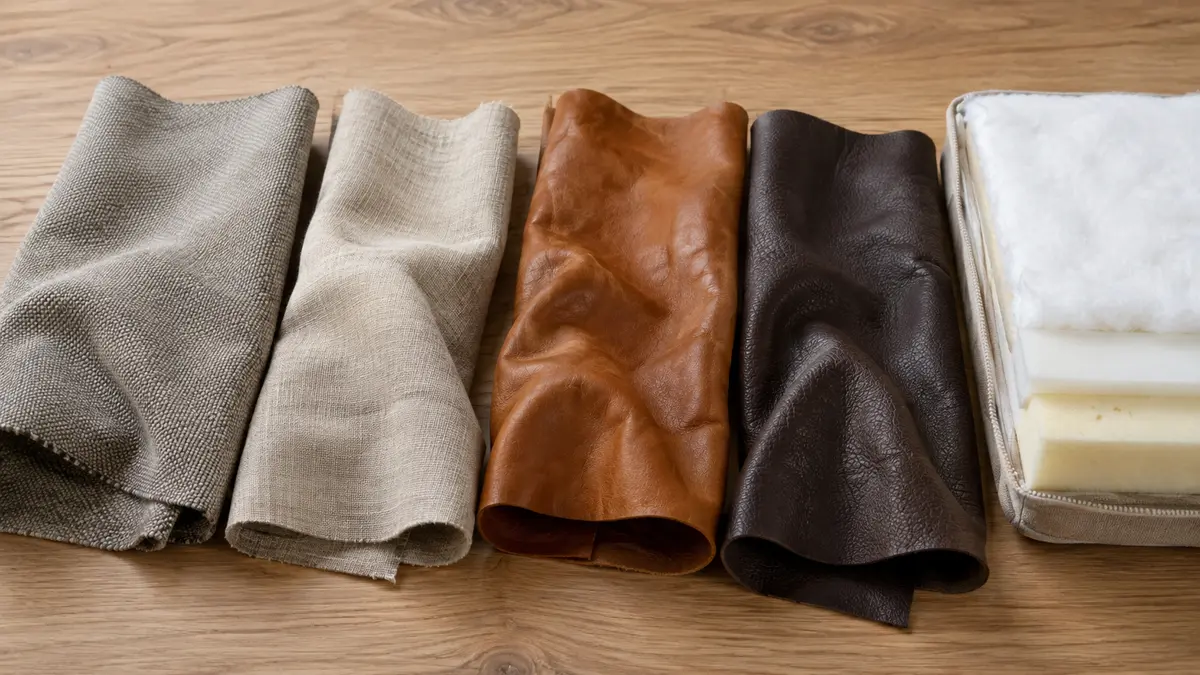
Full-grain, top-grain, corrected and split leathers have different surfaces and prices. Bonded or reconstituted materials contain leather fibres but do not perform like a full hide. Request written specifications rather than relying on the word “leather.”
Understanding Fabric Performance
Check fibre content, abrasion rating, pilling resistance, lightfastness and cleaning code. Natural linen is attractive but wrinkles; velvet changes appearance with pile direction; tightly woven synthetics may offer practical stain resistance.
Cost and Long-Term Value
Quality leather generally costs more initially. Fabric offers a wider price range and may allow removable replacement covers. Compare the full construction, expected life and repair options—not only purchase price.
Which One Should You Choose?
- Choose fabric when: softness, colour choice, removable covers or a cooler first touch matter most.
- Choose leather when: wipeable surfaces, patina and reduced hair retention suit the household.
- Choose neither blindly: test comfort, specifications and care requirements for the exact product.
Common Buying Mistakes
- Assuming all leather is the same
- Ignoring fabric cleaning codes
- Choosing cover material without inspecting the frame
- Placing leather in strong direct sun
- Buying loose-weave fabric for a scratching pet
- Judging comfort during a very short showroom test
Helpful Shopping Links
Affiliate disclosure: As an Amazon Associate, Djeema Furniture Guide earns from qualifying purchases. If you buy through these links, we may earn a commission at no additional cost to you.
The fabric vs leather sofa decision should reflect how the room is used every day. Fabric may feel softer and provide more colour choices, while leather is generally easier to wipe clean and can develop character with age. Your fabric vs leather sofa choice should also consider pets, children, climate and maintenance expectations. Before finalising the fabric vs leather sofa decision, read our guide on how to furnish a new home so the sofa coordinates with the room’s dimensions, colours and budget.
Final Thoughts
Select the exact fabric or leather specification that suits your climate and household, then verify the structure beneath it. A durable sofa depends on appropriate care and sound construction as much as its visible cover.