
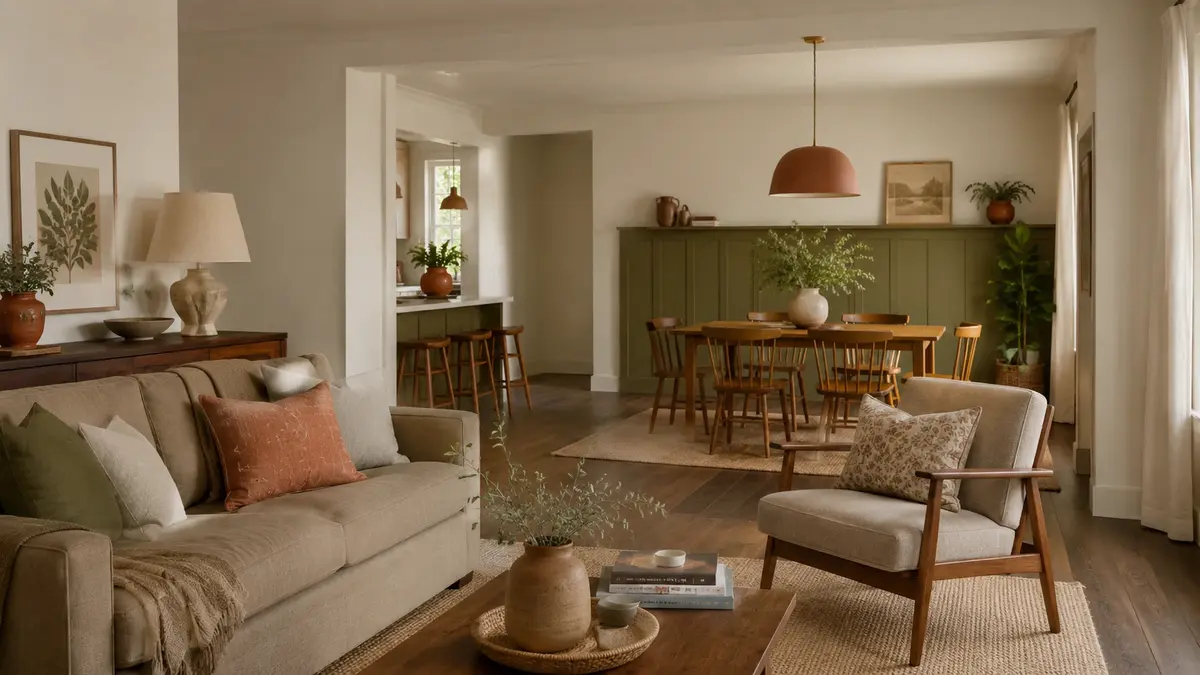
A whole-home colour palette connects separate rooms without making them identical. The most successful palettes begin with fixed finishes, repeat a small number of dependable neutrals and allow controlled variation by room. This guide explains how to create a whole-home colour palette that works with furniture, flooring, curtains and natural light.
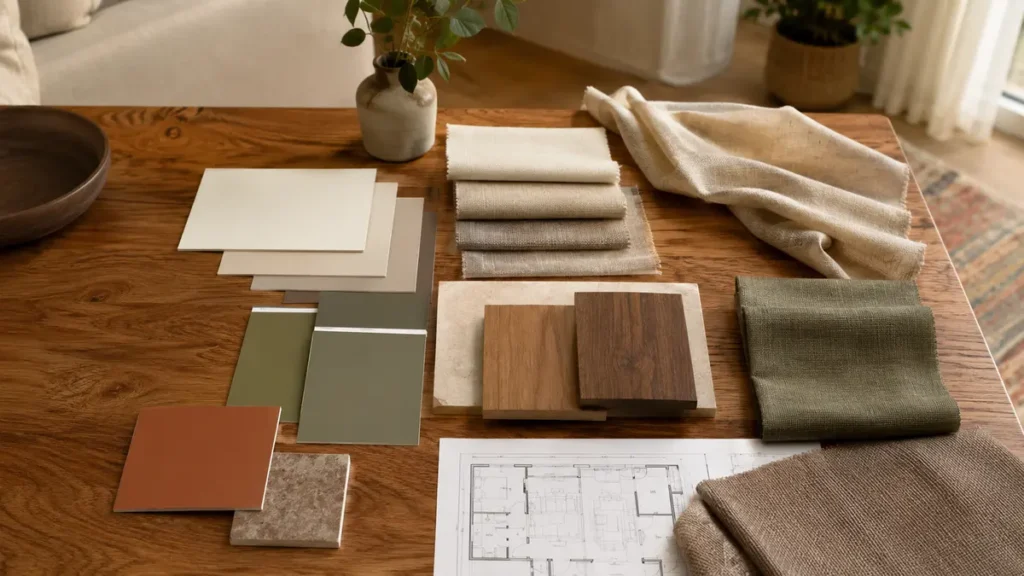
Table of Contents
Start with Finishes That Will Remain
Photograph the flooring, kitchen cabinets, stone, doors and large furniture that will stay. Identify whether their undertones appear warm, cool or balanced. These fixed colours should guide the palette because they are expensive to change.
Choose One Main Neutral
Select a dependable neutral for connected spaces and major walls. Warm whites, soft beige, greige and muted stone colours are flexible, but the correct choice depends on the floor and daylight. Compare large painted samples vertically against the wall rather than judging a small colour card.
Create a Simple Colour Hierarchy
Use the main neutral across the largest areas, a supporting colour in selected furniture or curtains, and one or two accents in smaller quantities. The percentages do not need to follow a rigid formula; the principle is that one colour leads while the others support it.
Repeat Colours in Different Materials
A sage accent might appear as upholstery in one room, a curtain detail in another and art elsewhere. Repetition creates connection without copying the same furniture. Vary texture and intensity so the result feels layered.
Coordinate Wood and Metal Finishes
Select one dominant wood family and allow one secondary tone where necessary. Woods do not need to match exactly, but their undertones should cooperate. Repeat a primary metal finish in lighting, handles and selected furniture details instead of introducing a new finish with every purchase.
Adjust the Palette for Each Room
Living areas may use the complete palette, bedrooms can emphasize its quieter colours and work areas can use stronger contrast. Bathrooms and children’s rooms may have distinct accents while repeating the home’s neutral or wood direction.
Consider Natural and Artificial Light
Review samples in morning, afternoon and evening conditions. A colour can appear warm beside one window and grey in a darker corridor. Check it under the actual lamps planned for the room.
Use a Portable Sample Kit
Keep paint references, flooring and wood photographs, fabric samples and metal finishes together. Take the kit when shopping so furniture is compared with the real palette rather than memory.
Common Whole-Home Colour Mistakes
- Selecting paint before considering the floor
- Using a different neutral in every room without comparing undertones
- Introducing too many unrelated wood finishes
- Choosing colours only from a phone screen
- Making every room identical instead of connected
- Forgetting how evening lighting changes colour
Helpful Shopping Links
Affiliate disclosure: As an Amazon Associate, Djeema Furniture Guide earns from qualifying purchases. If you buy through these links, we may earn a commission at no additional cost to you.
A whole-home colour palette works best when one neutral base appears throughout the property, supported by a small selection of coordinating accent colours. Repeat these accents through rugs, curtains, cushions and artwork to connect separate rooms. When developing your whole-home colour palette, compare every finish beside the flooring and major furniture. For broader planning, read our guide on how to furnish a new home.
Final Thoughts
A connected palette is limited, repeatable and flexible. Begin with permanent finishes, establish one main neutral and repeat selected colours, woods and metals in different ways. This gives every later furniture and furnishing purchase a clear context.