
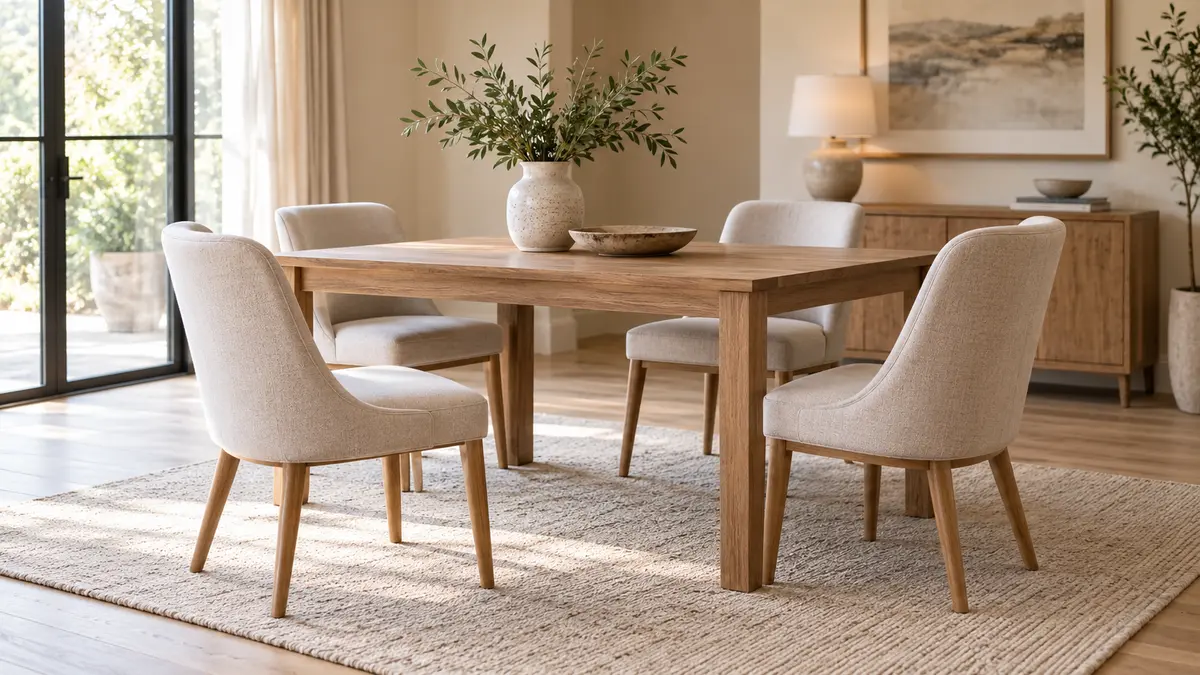
Choosing the correct dining table size is one of the most important parts of planning a comfortable dining area. A table that is too large can make the room feel cramped, while a table that is too small may not seat enough people or serve the family’s daily needs.
The correct dining table size should fit your room, allow easy movement, and provide enough seating for both everyday use and occasional guests.
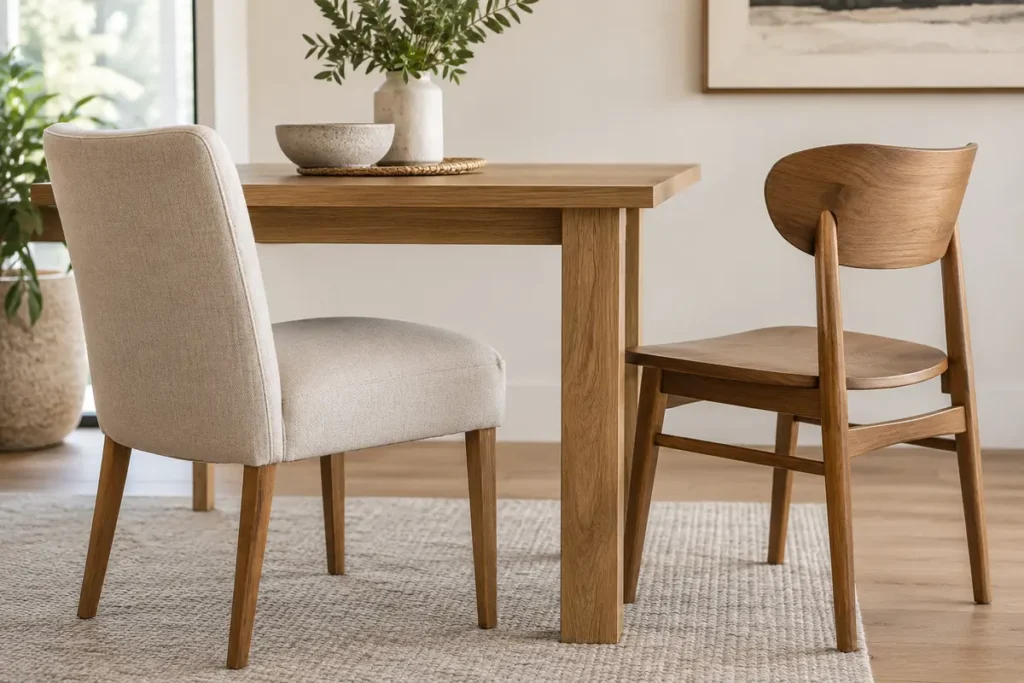
1. Start by Measuring the Room
Table of Contents
Before looking at table styles, measure the available dining area carefully. You need to know more than just the room’s total dimensions. Think about doors, walkways, windows, cabinets, and any other furniture nearby.
The most important rule is to leave enough space around the table so people can move comfortably.
A good guideline is to keep at least 90 cm (about 36 inches) between the table edge and the wall or other furniture. If the space is used as a main walkway, a little more clearance is even better.
2. Decide How Many People You Need to Seat
Think about your actual lifestyle. Ask yourself how many people use the table every day, how often you host guests, and whether you want room for serving dishes as well.
A smaller family may be comfortable with a four-seater table, while larger families may need six or eight seats. If you host only occasionally, an extendable table can be a very practical solution.
3. Understand Standard Seating Space
Each person needs enough width to sit and eat comfortably.
As a general guide:
- Allow approximately 60 cm (24 inches) of width per person.
- Allow sufficient table depth for plates, glasses and shared serving items.
This helps prevent the dining area from feeling crowded.
4. Choose the Right Table Shape
The shape of your room often influences which dining-table shape works best.
Rectangular Tables
Rectangular tables are the most common and work particularly well in longer rooms. They are practical for larger families and easy to place in many layouts.
Round Tables
Round tables encourage conversation and work especially well in smaller square spaces. They also avoid sharp corners and can create a softer visual appearance.
Square Tables
Square tables are suitable for smaller groups and balanced room shapes. They can feel intimate, although they may not be ideal for larger gatherings.
Oval Tables
Oval tables combine some of the advantages of rectangular and round tables. They can accommodate several people while maintaining softer edges.
Correct Dining Table Size Guidelines by Seating Capacity
Dining Table for 4 People
- Rectangular: approximately 120–140 cm long
- Round: approximately 100–120 cm diameter
Dining Table for 6 People
- Rectangular: approximately 150–180 cm long
- Round: approximately 135–150 cm diameter
Dining Table for 8 People
- Rectangular: approximately 200–240 cm long
- Round tables for eight generally require a large room and may be approximately 150–180 cm in diameter
These dimensions are useful starting points rather than strict rules. Use them to compare the correct dining table size for your household. Chair width, table-leg position, and the overall design of the table can affect comfortable seating capacity.
6. Do Not Forget Chair Space
The table itself is only part of the plan. Chairs need room too.
People should be able to:
- Pull the chair out comfortably.
- Sit without feeling squeezed.
- Move around the dining area without difficulty.
This is why room clearance matters just as much as table size.
7. Think About Daily Use Versus Special Occasions
Some people choose a very large table because they want to be prepared for guests, but that can make everyday living less comfortable.
If you need flexibility, an extendable dining table is often a practical option. It keeps the room more open for everyday use while giving you additional seating when required.
8. Match the Table to the Room Visually
A table should fit physically, but it should also feel balanced in the room.
A very heavy table in a small space can feel overwhelming. A very small table in a large room can look lost. Consider the table base, chair style, and overall scale of the furniture.
If your room is compact, lighter finishes and slimmer legs can help the space feel more open.
9. Consider the Dining Area Around the Table
The right dining setup is not only about the table. You may also need to consider:
- A rug underneath the table
- Pendant lighting above the table
- A sideboard or storage unit nearby
If you are using a rug, it should ideally be large enough for the chairs to remain on the rug even when they are pulled away from the table.
Compare Dining Tables Online
Compare dining-table sizes, shapes, materials and customer reviews before choosing the right option for your room.
Product availability, specifications and prices may change. Check the current details before purchasing.
Final Thoughts
The correct dining table size is the one that balances comfort, movement, and everyday practicality. Instead of choosing a table by appearance alone, measure your space carefully and think about how you actually use the room.
Focus on these essentials:
- Measure the room first.
- Leave enough clearance around the table.
- Choose the right shape for your layout.
- Match seating capacity to your real needs.
- Consider an extendable table if flexibility matters.
A well-sized dining table makes everyday meals more comfortable and helps the entire room feel better planned. For more room-planning guidance, read our guide on how to furnish a new home.