
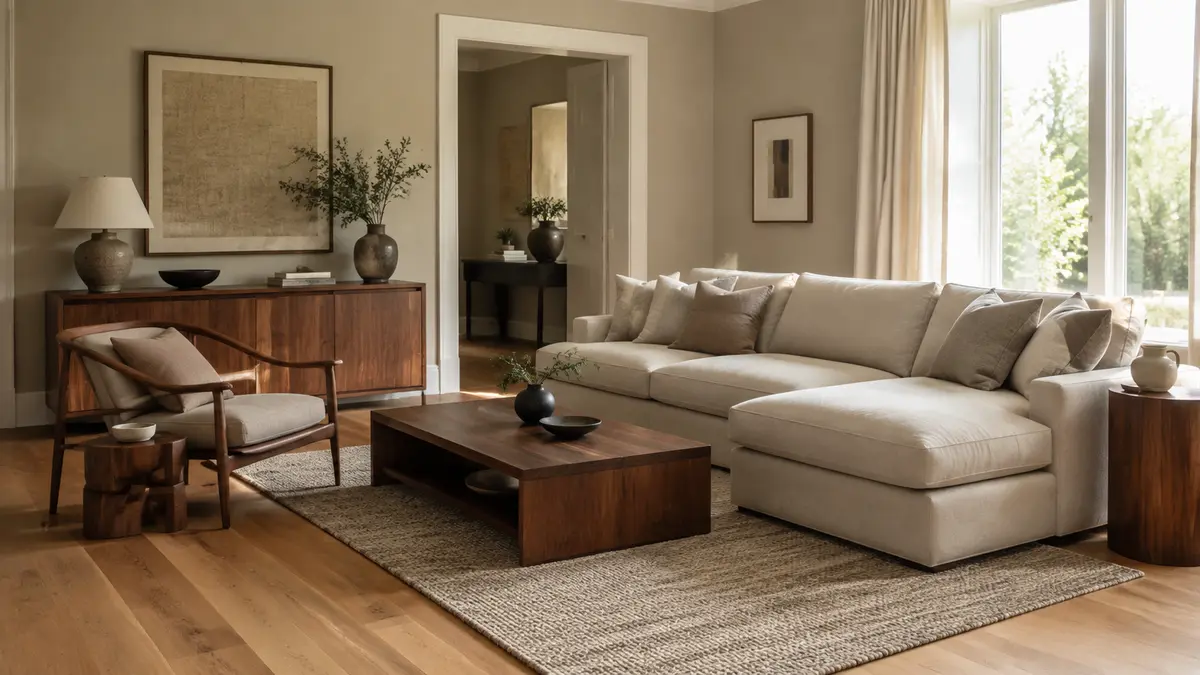
Flooring covers one of the largest surfaces in a home, so it should guide—not follow—many furnishing decisions. This practical guide explains how to match flooring with walls and furniture using undertone, contrast, scale and repetition.
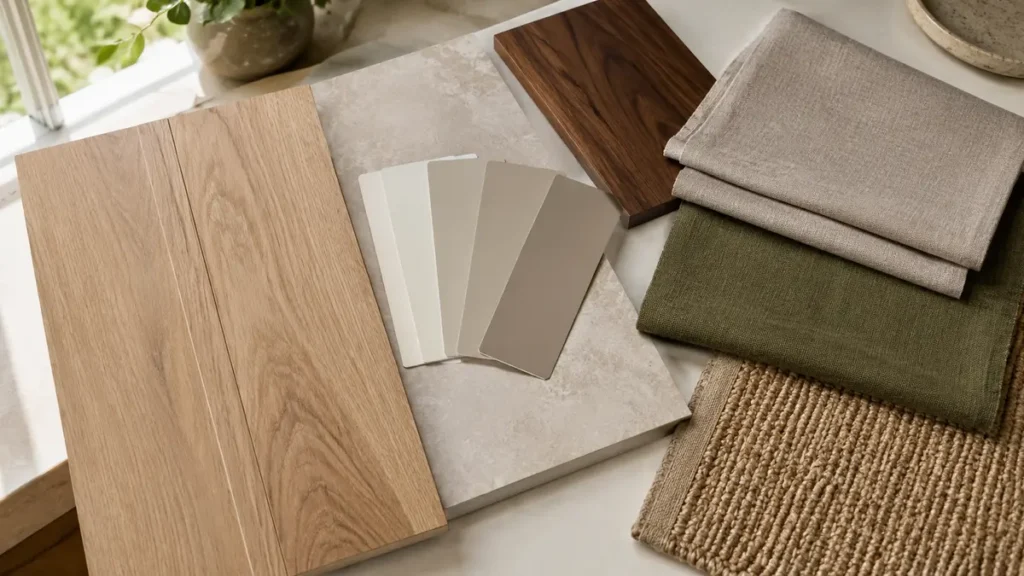
Table of Contents
Begin with the Floor’s Undertone
Look beyond light or dark. Wood may lean golden, orange, red, grey or brown; stone and tile may carry cream, pink, green or blue. Compare large samples in the room before choosing paint or upholstery.
Decide the Level of Contrast
Light furniture on light flooring creates an airy result but needs texture and tonal variation. Dark-on-dark can feel intimate but requires sufficient light. Moderate contrast is often the easiest to balance.
Match Walls Without Making Everything Identical
Choose a wall neutral that relates to the floor’s temperature while remaining visibly separate. A warm oak floor may suit warm white, soft greige or muted green; a cool grey tile may cooperate with balanced white, blue-grey or cool taupe.
Coordinate Wood Furniture
Furniture does not need to copy the floor. Use a lighter or darker wood with a compatible undertone, then repeat that furniture tone in two or three places. Rugs can create useful separation between similar woods.
Use Upholstery to Bridge Surfaces
Neutral sofa fabric can connect floor and walls. Cushions, curtains and rugs may repeat smaller notes from both, creating a gradual colour transition rather than an abrupt clash.
Consider Pattern and Scale
Strong floor grain or patterned tile needs calmer furniture and textiles. Quiet flooring can support more expressive rugs or upholstery. Avoid placing several dominant patterns at the same visual level.
Room-by-Room Continuity
Where flooring changes, repeat a wall colour, wood tone or fabric family across the transition. In open plans, view all materials from the main entrance and seating positions.
Common Coordination Mistakes
- Choosing paint from a screen instead of beside the floor
- Matching every wood exactly
- Ignoring grout and skirting colours
- Using a rug too small to connect the furniture
- Combining several strong grains and patterns
Helpful Shopping Links
Affiliate disclosure: As an Amazon Associate, Djeema Furniture Guide earns from qualifying purchases. If you buy through these links, we may earn a commission at no additional cost to you.
How to Match Flooring with Walls and Furniture
To match flooring with walls and furniture successfully, begin with the floor because it covers a large area and is usually changed less often than paint or accessories. Identify whether the flooring has warm, cool or neutral undertones. Warm wood, beige tile and cream stone generally pair well with warm whites, earthy walls and furniture in brown, tan or muted green.
Cool grey flooring works better with crisp white, soft blue, charcoal and furniture that has cooler undertones. Avoid combining too many similar shades, as the room may look flat. Instead, create gentle contrast. Dark flooring can be balanced with lighter walls and medium-toned furniture, while pale flooring can support deeper wall colours or darker furniture.
When you match flooring with walls and furniture, compare samples inside the actual room before deciding. Natural and artificial light can change how colours appear throughout the day. Place flooring, paint and fabric samples together and check them during the morning, afternoon and evening. Repeating one or two colours through cushions, curtains, rugs or decorative pieces will help the entire room feel connected and balanced.
For more help coordinating the room, read our guide on choosing a sofa colour that works with your walls and floor.
Final Thoughts
Let flooring establish the temperature and visual weight, then build controlled contrast through walls, furniture and textiles. Physical samples viewed together make the final room far more predictable.