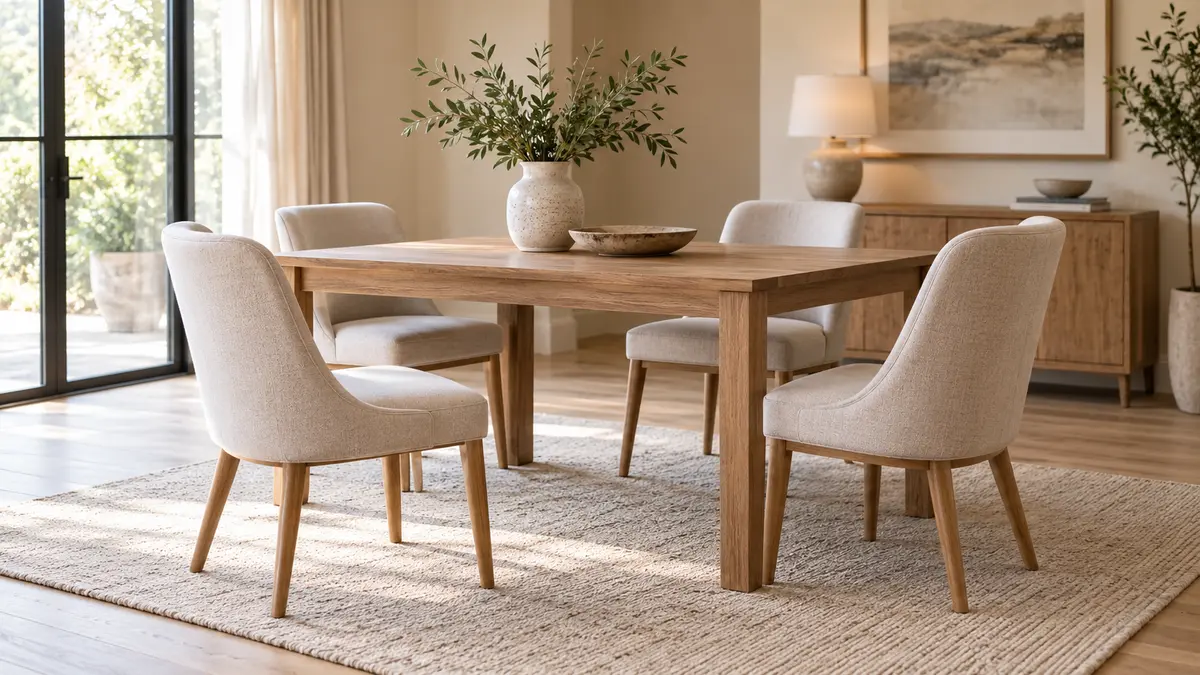
How to Choose the Right Dining Chair for Comfort and Everyday Use
September 20, 2026 · 6 min read
Affiliate disclosure: This article may contain affiliate links. As an Amazon Associate I earn from qualifying purchases, at no additional cost to you.
When choosing a dining chair for comfort, check that the seat supports most of your thighs without pressing behind your knees. Your feet should rest naturally on the floor, and the backrest should provide comfortable support during longer meals.
The best dining chair for comfort should also fit beneath the table without hitting the apron or table frame. Always compare the chair’s seat height, arm height and overall width with the dining table before purchasing several matching chairs.
Dining Chair for Comfort: Important Measurements
A dining chair for comfort should support the thighs without placing pressure behind the knees. Check the seat height against the dining table and make sure there is sufficient space between the seat and the underside of the tabletop.
When comparing a dining chair for comfort, test the seat depth, backrest angle and overall stability. An upholstered seat may feel softer, while a shaped wooden seat can be easier to maintain. The best dining chair for comfort should suit both regular meals and longer conversations around the table.
Choosing the right dining chair is about more than appearance. A good dining chair should feel comfortable, fit properly under your dining table, suit the size of the room and remain practical for everyday use.
Affiliate Disclosure: This article contains affiliate links. As an Amazon Associate, we earn from qualifying purchases at no additional cost to you.
Dining chairs are used frequently and often for longer than expected during family meals, conversations and gatherings. Before choosing a set, it is worth checking dimensions, seat comfort, materials, construction quality and how well the chairs work with your dining table.
1. Check the Chair Height Against Your Dining Table
The first thing to check is whether the chair height works comfortably with your dining table. Most dining tables are approximately 74–76 cm high, while many dining-chair seats are around 43–48 cm high.
What matters most is the space between the chair seat and the underside of the table. You should have enough room for your legs without feeling cramped.
As a practical guide, aim for roughly 25–30 cm of space between the chair seat and the underside of the tabletop, although the exact requirement depends on the table apron, chair cushioning and the user.
2. Consider Seat Width and Depth
Dining chairs should be wide enough to sit comfortably without making the table feel overcrowded.
A seat that is too narrow can feel uncomfortable, while an excessively wide chair may reduce the number of people who can sit around the table.
Also check seat depth. A very deep seat may be uncomfortable for shorter users, while a shallow seat may provide limited thigh support.
Djeema Expert Note:
Before buying a full dining-chair set, compare the chair width with the usable length of your table. Allow enough space between chairs so people can sit, move and get up comfortably.
3. Choose a Comfortable Backrest
The backrest has a major effect on comfort. A dining chair should support your back without forcing you into an awkward position.
A slightly angled or shaped backrest can feel more comfortable during longer meals. Very upright or decorative chairs may look attractive but may not be ideal if comfort is a priority.
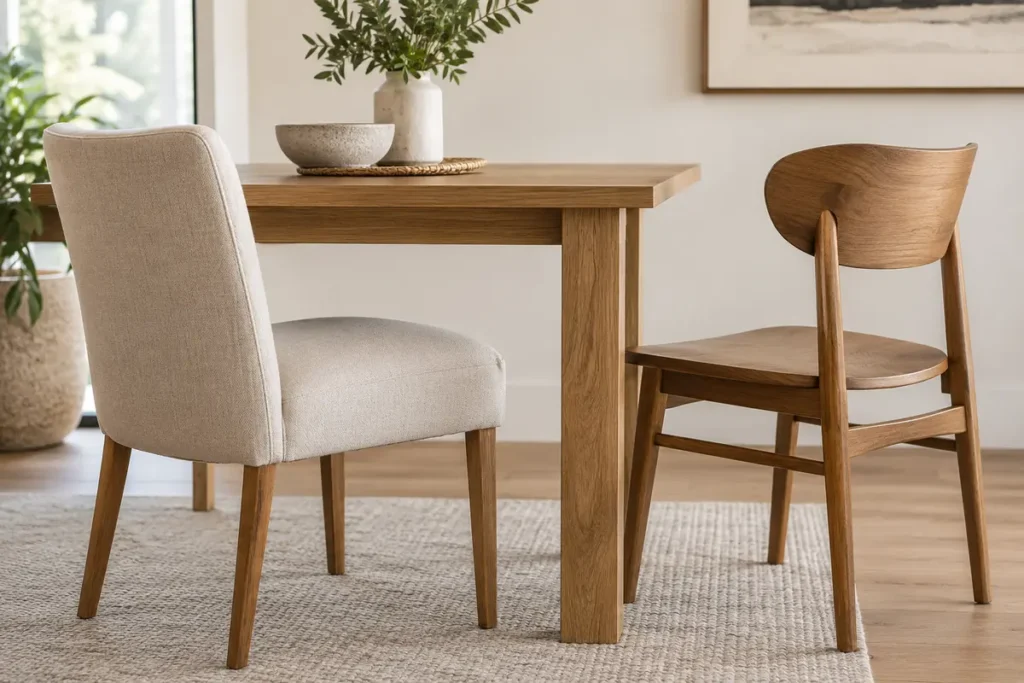
4. Decide Between Upholstered and Non-Upholstered Chairs
Both types can work well, but they suit different needs.
Upholstered chairs: generally provide softer seating and a more premium appearance.
Wooden chairs: are durable, easy to clean and suitable for many interior styles.
Metal-frame chairs: can be strong and visually lighter, especially in modern interiors.
Plastic or molded chairs: are practical, easy to maintain and often suitable for casual dining spaces.
For homes with children or frequent everyday use, easy-clean materials may be more practical than delicate fabrics.
5. Check the Frame and Construction Quality
Dining chairs are moved, pulled and pushed every day, so construction quality matters.
Check whether the chair feels stable when you sit on it. Look at the joints, legs and frame connections. A chair that rocks or flexes excessively may not provide good long-term value.
For wooden chairs, strong joinery and properly finished edges are important. For metal chairs, check the welding, frame stability and floor-protection pads.
6. Think About Armchairs vs Armless Dining Chairs
Armless dining chairs are usually easier to fit around a table and can help maximize seating capacity.
Dining armchairs can provide additional comfort and are often used at the two ends of a rectangular dining table. However, you must confirm that the arms can fit beneath the tabletop or table apron if you want the chairs to slide fully under the table.
7. Match the Chair Scale to the Room
Large, heavily upholstered chairs can look impressive in a spacious dining room but may overwhelm a smaller space.
For compact dining areas, chairs with slimmer legs, open backs or lighter visual proportions can help the room feel less crowded.
The chair should complement the dining table without making the whole setting appear too heavy or too small.
8. Choose Materials for Your Climate and Lifestyle
Material selection should consider everyday use, cleaning and climate.
In warm climates, breathable fabrics and open-back designs may feel more comfortable.
In homes with young children, wipe-clean surfaces can be easier to maintain.
For formal dining areas, upholstered chairs can create a more refined appearance.
For high-use dining areas, durability and ease of maintenance should be prioritized.
9. Make Sure the Chairs Do Not Crowd the Table
One of the most common mistakes is choosing chairs individually without checking how many will actually fit around the table.
As a practical starting point, allow approximately 55–60 cm of table-edge width for each person. Wider chairs, armchairs or heavily upholstered designs may need more space.
Also check the position of table legs and supports. A table may be long enough for several chairs but still have limited usable seating space because of its base design.
10. Important Features to Check Before Buying
Correct seat height for your dining table
Comfortable seat width and depth
Supportive backrest
Strong and stable frame
Suitable material for everyday use
Enough space between chairs
Floor-friendly feet or protective pads
Easy cleaning and maintenance
Appropriate size for the dining room
Style that complements the dining table
Interested in Comparing Dining Chairs?
Check current dining-chair styles, sizes, materials, ratings and availability on Amazon. Compare the dimensions carefully with your dining table before ordering.
Product availability, specifications and prices may change. Please check current dimensions, materials, quantity per set and delivery details before purchasing.
The right dining chair should balance comfort, size, durability and appearance. Do not choose only by looking at the design in a photograph.
Measure your dining table, check the chair dimensions and think about how the dining area is actually used every day.
A well-chosen dining chair should fit comfortably under the table, provide enough support for relaxed meals and complement the room without making the dining space feel crowded.
Better spaces, better choices
Furniture guidance worth saving.
Explore practical advice, buying guides and thoughtful furnishing ideas for homes and workplaces.